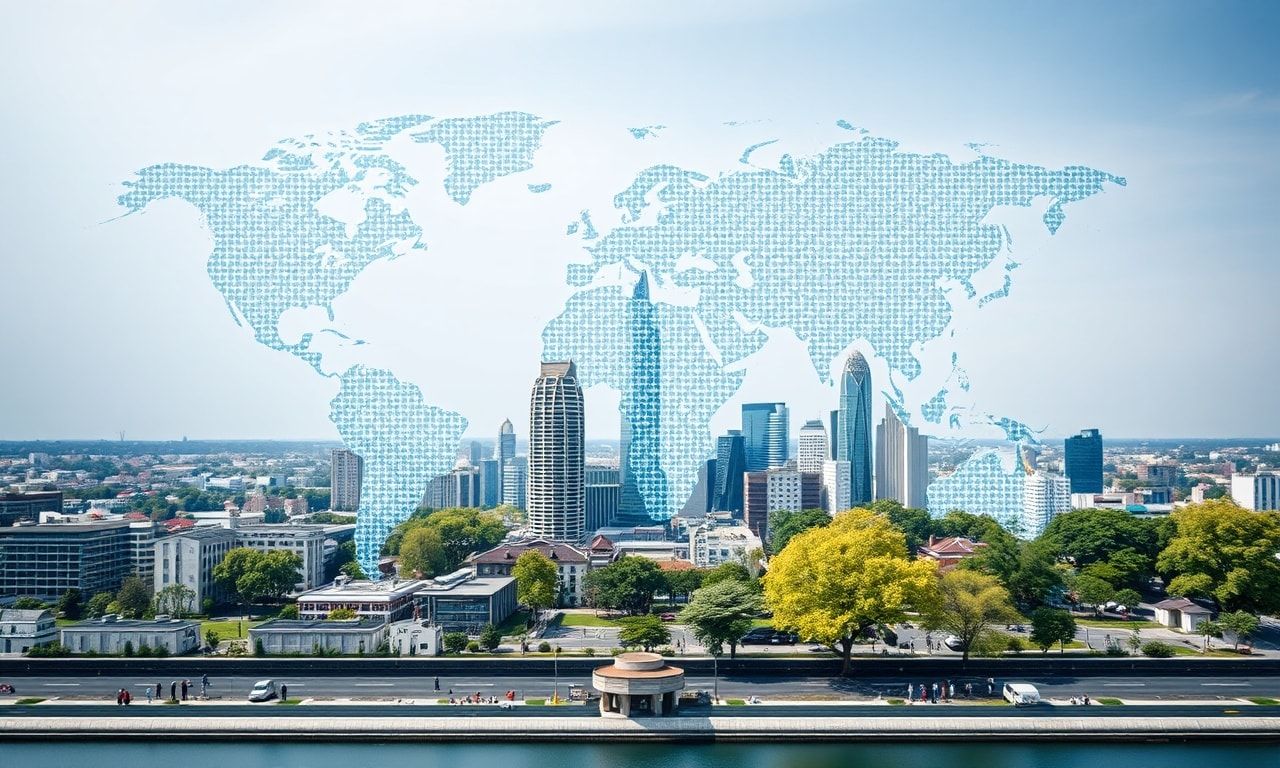
The Rise of International Urban Partnerships
In an era where urbanization is rapidly reshaping our world, cities across the globe are joining forces to tackle common challenges and foster sustainable development. This collaborative approach is evident in recent initiatives where cities like London and Düsseldorf are sharing best practices and innovative solutions to create more livable, resilient, and environmentally friendly urban spaces.
London and Düsseldorf: A Transcontinental Alliance
London, a bustling metropolis known for its rich history and dynamic economy, has been actively engaging with cities worldwide to address issues such as climate change, traffic congestion, and housing shortages. One of its notable partners is Düsseldorf, a vibrant city in Germany renowned for its cultural diversity and economic prowess. The collaboration between these two cities has led to the exchange of expertise in areas such as public transportation, green energy, and urban planning.
For instance, London’s successful implementation of the Congestion Charge has inspired Düsseldorf to explore similar measures to reduce traffic and improve air quality. Additionally, both cities are investing heavily in renewable energy projects, with London’s focus on wind and solar power complementing Düsseldorf’s advancements in hydrogen technology. This synergy not only enhances their respective sustainability efforts but also sets a precedent for other cities to follow.
For more detailed updates on Düsseldorf’s urban development projects, you can visit the Düsseldorf Nachrichten Königsallee 2026 website, which provides comprehensive coverage of local initiatives and global collaborations.
The Role of Technology in Urban Innovation
Technology plays a pivotal role in the success of these international urban partnerships. Smart city technologies, such as IoT (Internet of Things) devices and AI-driven data analytics, enable cities to monitor and manage their resources more efficiently. London, for example, has deployed smart sensors to optimize traffic flow and reduce energy consumption in public buildings. Similarly, Düsseldorf has integrated smart grids to enhance the distribution of renewable energy.
These technological advancements are not only improving the quality of life for residents but also attracting businesses and investors. Cities that embrace innovation are positioning themselves as leaders in the global economy, drawing in talent and resources that drive further growth and development.
Challenges and Solutions
Despite the numerous benefits of international urban partnerships, there are challenges that cities must overcome. Differences in regulations, cultural norms, and economic conditions can hinder collaboration. However, cities like London and Düsseldorf are addressing these issues through open dialogue and mutual respect for each other’s unique circumstances.
One effective strategy is the creation of joint task forces composed of experts from both cities. These task forces focus on specific areas of concern, such as waste management or public health, and develop tailored solutions that can be adapted to local contexts. By sharing resources and knowledge, cities can overcome obstacles more efficiently and achieve their sustainability goals.
The Future of Urban Collaboration
The future of urban collaboration looks promising, with more cities joining forces to create a sustainable and inclusive urban environment. Initiatives such as the C40 Cities Climate Leadership Group and the 100 Resilient Cities program are facilitating these partnerships by providing platforms for cities to connect, share ideas, and implement solutions.
As urban populations continue to grow, the need for collaborative efforts will only increase. Cities must continue to innovate and adapt to the changing needs of their residents. By learning from each other and leveraging their collective strengths, cities can build a more sustainable and resilient future for all.
Conclusion
The collaboration between London and Düsseldorf exemplifies the power of international urban partnerships. By sharing knowledge, resources, and technological advancements, these cities are setting a new standard for sustainable urban development. As more cities join this global movement, the benefits will extend beyond individual urban centers, creating a ripple effect that promotes a healthier, more sustainable planet.
Amidst the ongoing global cultural exchange, a deeper look into Düsseldorf’s vibrant arts scene reveals a city thriving with historical significance and contemporary creativity.
As renewable energy gains global momentum, a new report highlights Turkey’s rising green energy investments and their impact on the region’s energy landscape.